
Service templates
The Catalogue is your library of reusable service templates — the “shapes” of infrastructure you deploy for customers (e.g. “Core API”, “Payments Worker”, “Reporting DB”).
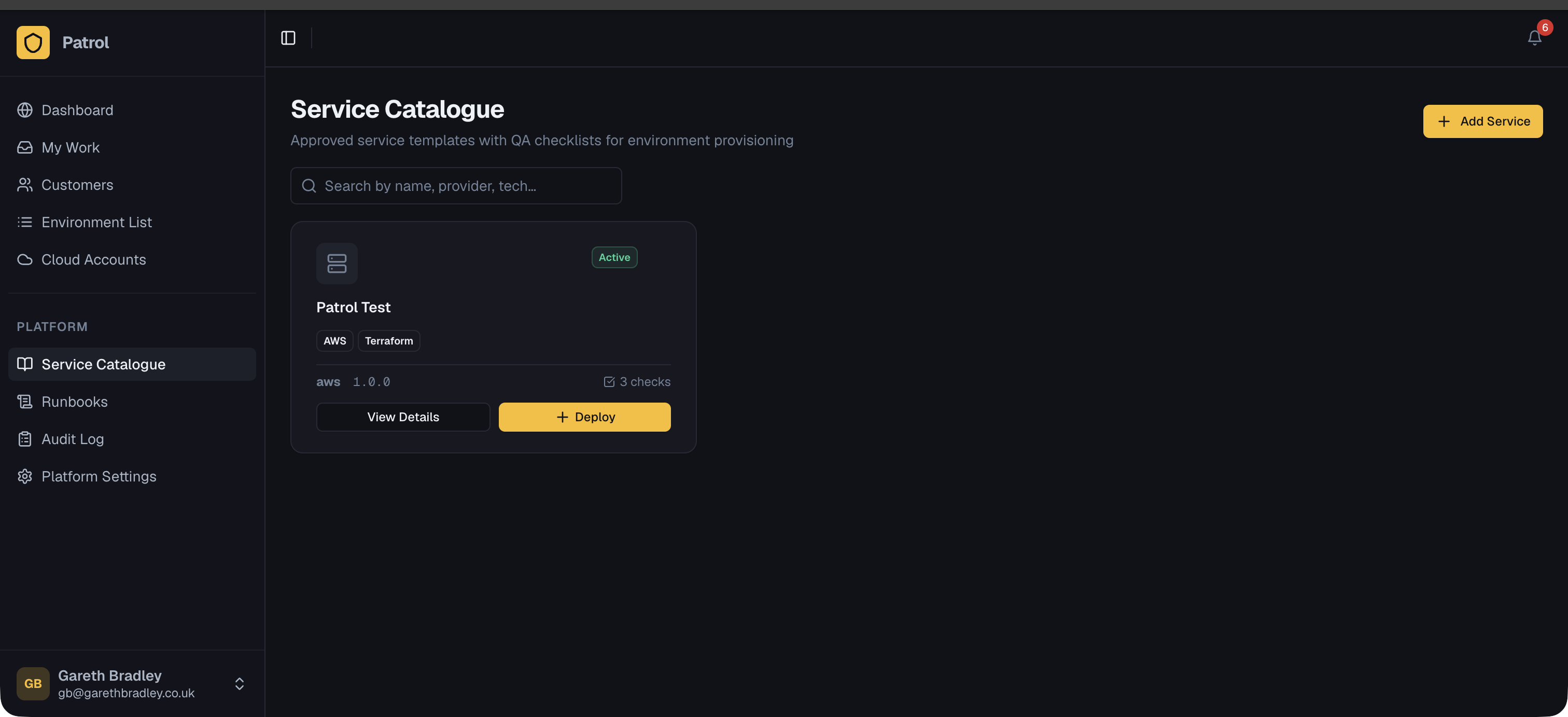
From Catalogue → Add Service Template, define:
- Name, description, provider, tech stack, version
- Status — keep as
draftuntil it’s ready; onlyactivetemplates show up when registering new environments - QA checklist items — the checks a reviewer runs through for environments built from this template
- Parameter schema — typed parameters the template exposes (e.g.
instance_size,db_version, secret references for credentials). These become the form fields filled in per-environment when an environment is registered. - Deployment config — how Patrol triggers a deployment for this template: trigger type (webhook, GitHub Actions, GitLab, Terraform Cloud, Ansible AWX, Azure DevOps, or Vagrant) plus any secret refs it needs (API tokens, webhook URLs, etc.)
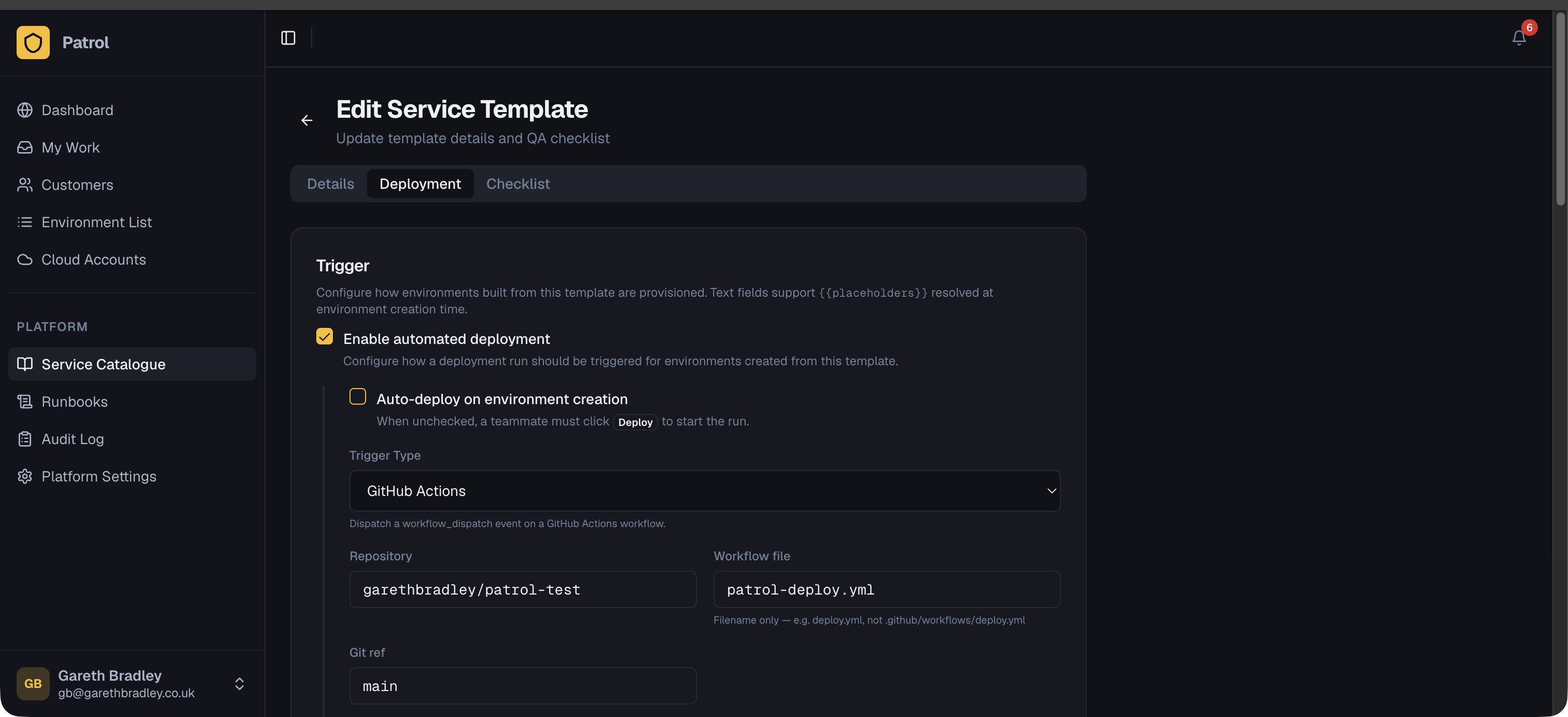
Versioning via snapshots
Section titled “Versioning via snapshots”Templates are versioned conceptually — when an environment is created, Patrol snapshots the template’s deploymentConfig and parameterSchema at that point in time, so later edits to the template don’t retroactively change already-deployed environments.
This means you can safely iterate on a template’s deployment config or parameter schema without affecting customers already running on an earlier version of that template.
Next steps
Section titled “Next steps”- Environments — register environments from a template and deploy them
- Secrets — how secret references in a parameter schema are resolved